







When a semi, dump truck, RV, or commercial vehicle goes down, the search for “heavy duty towing near me” usually happens fast and under pressure. A driver is on the shoulder of I-94, a dispatcher is trying to keep a load on schedule, or a fleet manager is staring at a breakdown that’s costing money by the minute. The temptation is to call the first number that loads. That’s how a lot of recoveries go sideways, because not every towing company that shows up on a local search has the equipment, the training, or the licensing to legally and safely move a heavy vehicle.
If you’re in the Fargo area, here is what to verify before you commit to a heavy-duty tow truck.
1. Confirm the Provider Actually Handles Heavy-Duty Work
The first filter is the simplest one. “Heavy-duty” in the towing world generally means vehicles over 26,000 pounds gross vehicle weight rating, including semis, tractor-trailers, dump trucks, motorhomes, buses, and most commercial fleet vehicles. A light-duty operator with a flatbed wrecker is not the right call for that job, even if their search listing makes it look local and convenient.
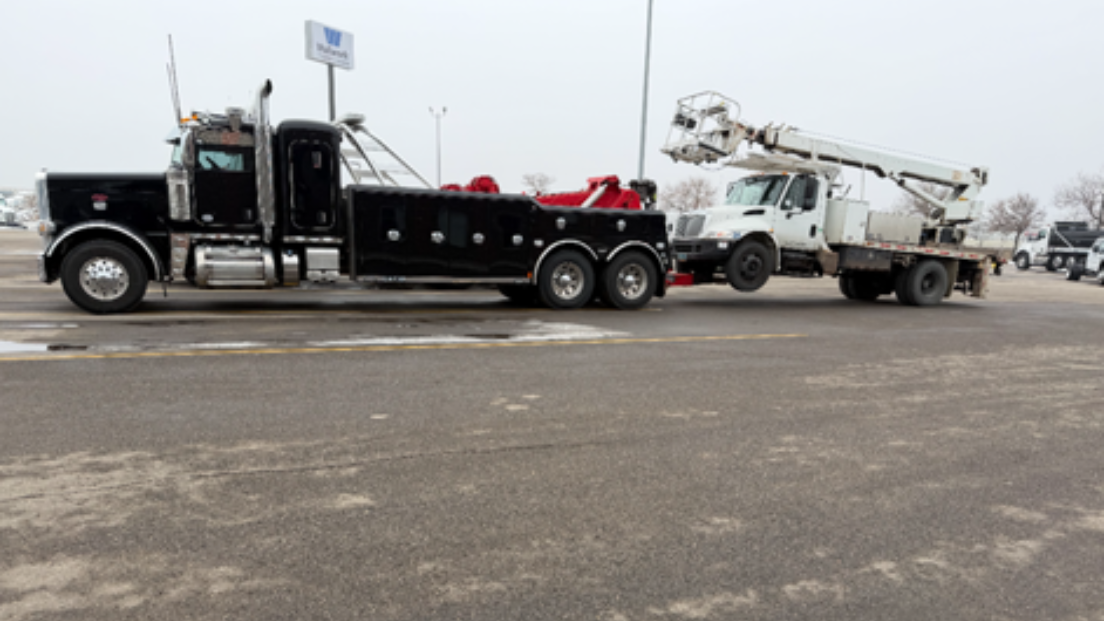
Ask directly: “Do you run heavy-duty wreckers, and what is the largest vehicle you can recover?” An operator with the right equipment will answer in seconds. If the answer is vague, keep looking. Austin’s Towing & Recovery is set up specifically for heavy-duty calls, with equipment built to handle the weight class commercial vehicles demand.
2. Ask About Response Time and Service Area
Search results that say “near me” are a starting point, not a guarantee. A heavy-duty wrecker sitting 60 miles away can still beat a closer light-duty operator who has to subcontract the job, but you need to ask. The two questions that matter:
- “Where is your nearest heavy-duty unit right now?”
- “What is your realistic ETA to my exact location?”
If you’re stranded in Fargo, West Fargo, Moorhead, or anywhere along I-94 or I-29, a regional heavy-duty operator with local dispatch will almost always be faster than a national broker who routes the call through a call center. Austin’s Towing & Recovery dispatches from West Fargo, ND, with coverage across North Dakota, Minnesota, and South Dakota. That puts a heavy-duty truck within reasonable reach of most of the I-94 and I-29 corridors.
3. Verify 24/7 Availability and a Live Dispatcher
Heavy-duty breakdowns don’t keep business hours. Verify that the company actually answers calls 24/7 with a live person who can dispatch immediately, not an answering service that takes a message. When you call (701) 388-3198, you’re connected to dispatch directly, day or night.
A simple test: if the company puts you on hold for more than a minute or asks you to leave a voicemail, that’s your answer about how the rest of the call will go.
4. Ask About Licensing, Insurance, and Operator Training
Heavy-duty towing is a regulated activity. Operators moving commercial vehicles across state lines need motor carrier authority, proper licensing, and cargo and liability insurance that covers the value of the load. Drivers handling heavy wreckers should be properly trained and licensed for the rig they’re operating.
You don’t need to interrogate the dispatcher, but you should feel comfortable asking:
- Are your operators trained in heavy recovery?
- Do you carry cargo and on-hook coverage?
- Can you provide insurance and authority info if my fleet’s risk team asks?
A reputable heavy-duty towing company in the Fargo-Moorhead area will be ready to answer all three.
5. Be Clear About the Scenario
A “heavy duty tow” can mean a half-dozen different jobs, and the right equipment depends on which one you have. Before you call, gather:
- What vehicle is involved (make, model, weight, load)
- Where it is, as precisely as possible (mile marker, cross street, side of road)
- What happened (mechanical failure, accident, off-road, rollover, cargo shift)
- Whether the vehicle is loaded and what it’s carrying
- Whether anyone is hurt or in danger
That information lets dispatch send the right truck on the first try. Sending a standard heavy wrecker to a rollover that actually needs a rotator and a load transfer wastes everyone’s time, and time is the whole reason you’re calling.
6. Get a Real Cost Conversation, Not a Lowball Quote
Heavy-duty tows are priced based on equipment, distance, scene time, and the complexity of the recovery. For typical price ranges in the upper Midwest, see our heavy-duty towing cost guide. Anyone giving you a flat $300 quote sight-unseen for a semi recovery is either uninformed or planning to surprise you with add-ons later. A trustworthy operator will explain how pricing works, what variables affect the final invoice, and whether the call is billable to your fleet account or insurance carrier.
For commercial operators with recurring needs, ask about fleet account setup. A standing relationship with a heavy-duty operator in your service area means faster response, predictable billing, and one less thing to negotiate at 2 a.m. on the side of I-29.
Need Heavy-Duty Towing in Fargo, West Fargo, or Anywhere Across ND, MN, or SD?
Call Austin’s Towing & Recovery 24/7 at (701) 388-3198. Heavy-duty wreckers, trained operators, and local dispatch ready when you are.